


Med Student Participates in EMRA Advocacy Initiative
As part of her EMRA/ACEP Medical Student Health Policy Elective participation, EMRA medical student member Jackie King attended an event for Rep. Kim Schrier, MD (D-WA), in Washington, DC. At the event, King was able to meet special guest Rep. Nancy Pelosi (D-CA).
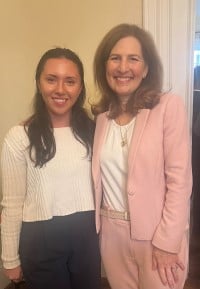
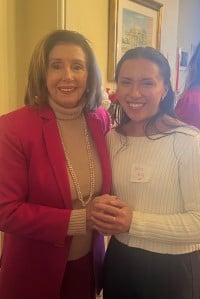
Medical student Jackie King (left, in left-side photo) with Rep. Kim Schrier, MD (D-WA). King (right, in right-side photo) with Nancy Pelosi (D-CA).
The EMRA/ACEP Medical Student Health Policy Elective provides EM-bound medical students the opportunity to research legislative issues pertinent to the practice of EM. Participants gain hands-on experience as advocates for the specialty through interactions with local, state, and federal legislators.
ABEM Elects New Board Members
The American Board of Emergency Medicine (ABEM) recently elected 2 new physician members: John T. Finnell, MD, MSc, and Melissa A. Platt, MD.
Dr. Finnell is a professor of clinical emergency medicine in the Department of Emergency Medicine at the Indiana University School of Medicine. He practices as a nocturnist at Eskenazi Health.
Dr. Platt is a professor and former program director in the Department of Emergency Medicine and associate dean of graduate medical education at the University of Louisville School of Medicine. She practices clinically at the UofL Hospital.