


The Art of Mamma Docing
The Art of Mamma Docing
May 15, 2019
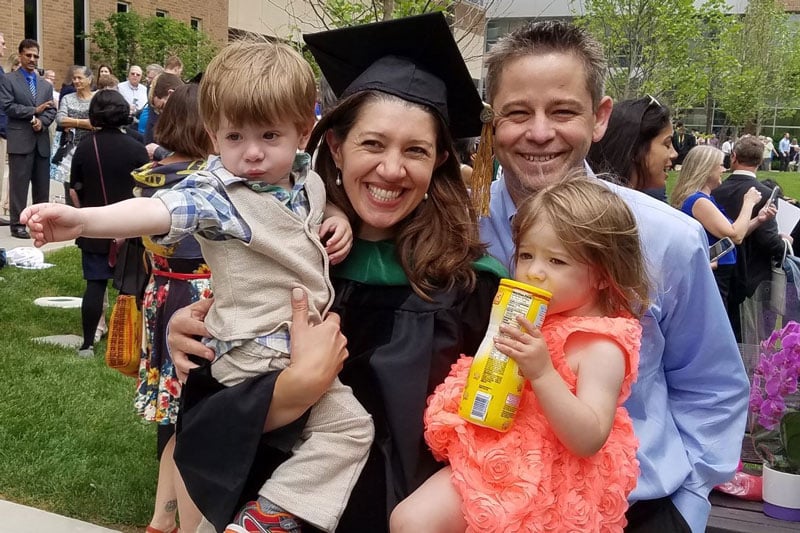
In this episode, Tiffany talks with a panel of Super Doctor Mammas about the art and challenge of mamma docing. The panel openly discusses challenging topics in an attempt to demystify and destigmatize the daily struggles all of us mammas in medicine face throughout medical school, residency and beyond.







Host
Tiffany Proffitt, DO, MABS
Attending Physician
Honor Health, Scottsdale, AZ
Guests
Meenal Sharkey, MD
Core Faculty at Doctors Hospital
Tatiana Moylan, MD
Yale, PGY-1
@tatianamoylan
Mackensie Yore, MD
UC Fresno, PGY-2
Leah Bauer, MD
UC Fresno, PGY-3
Overview:
In this episode, Tiffany talks with a panel of Super Doctor Mammas about the art and challenge of mamma docing. The panel openly discusses challenging topics in an attempt to demystify and destigmatize the daily struggles all of us mammas in medicine face throughout medical school, residency and beyond. Listen as we discuss topics such as when to disclose your pregnancy, the lack of firm maternity leave policies in residency, and touch briefly on dealing with miscarriage and infertility during medical training.
References
- ACGME Institutional requirements: https://www.acgme.org/Portals/0/PFAssets/InstitutionalRequirements/000InstitutionalRequirements2018.pdf?ver=2018-02-19-132236-600
- Greenfield NP. Maternity and medical leave during residency: Time to standardize?. Int J Womens Dermatol. 2015;1(1):55. Published 2015 Feb 20. doi:10.1016/j.ijwd.2014.12.009
- Humphries, LS, Lyon, S, Garza, R, et al. Parental leave policies in graduate medical education: A systematic review. American Journal of Surgery. 2017; Oct;214(4):634-639.
Key Points
- In the era of Times Up Healthcare, I hope concrete ACGME policy change to accommodate moming in medicine is on the docket.
- You need to sit down with your PD and make a concrete policy for your individual pregnancy and maternity leave because there are few well laid out policies in general in GME.
- When planning maternity leave during residency, do not just look at it as the short time frame of delivery to first few months post-partum. Plan it in the context of your entire 3-4 years of residency (depending on the program) and have early discussions with your PD on how to arrange your blocks over those 3-4 years.
- MAMMAS IN MEDICINE: YOU ARE AMAZING!!!! AND YOU ARE NOT ALONE!!!
Related Content

Dec 12, 2021
Pandemic PTSD and Protecting Our Mental Health
After months of working on the front lines, emergency medicine attending physicians, residents, and medical students are all familiar with the routines of the COVID-19 pandemic. They work under the weight of inherent risks to their own health and their family's well-being, a patient population struggling with misinformation, a decimated workforce, and contract challenges. It's all leading to post-traumatic stress disorder.
Dec 12, 2021
3D Printing PPE in the COVID-19 Pandemic
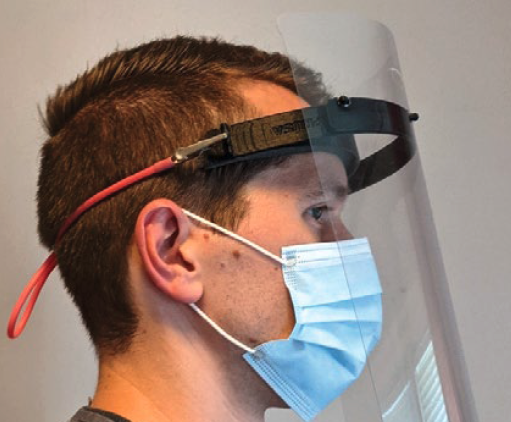
Supply chain disruption during the COVID-19 pandemic forced healthcare systems to look for alternative ways to meet dramatically increased demand for personal protective equipment. This paper outlines an interdisciplinary approach to evaluating and refining a 3D-printed face shield design for use in the Emergency Department of a level 1 Trauma center in eastern North Carolina.
Dec 12, 2021
POCUS for the Win: Focal Segmental Glomerulosclerosis
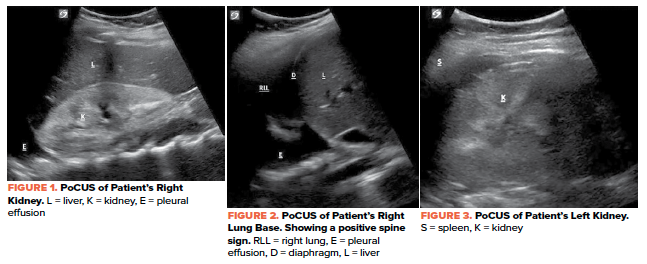
Point of care ultrasound can be used to help evaluate patients with suspected kidney pathology and to diagnose causes of renal colic, renal failure, hematuria, and decreased urine output. Compared to computed tomography (CT), ultrasound can result in shorter lengths of stay, lower cost, and improved safety.